Xinhua Headlines: Iran, U.S. hold talks amid tense standoff, with core differences unresolved

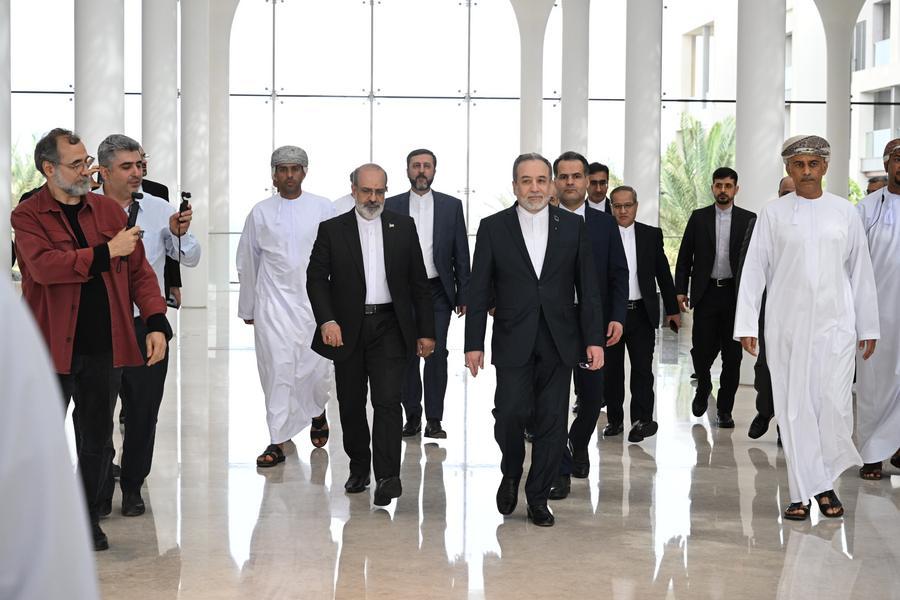
* Iranian and U.S. delegations held their latest round of talks on Friday in Muscat, Oman, amid a weeks-long standoff, offering a glimmer of hope for de-escalating the regional tensions at the negotiation table.
* Although getting delegations from the two countries to the negotiation table itself represents a diplomatic step forward, the deep-rooted distrust and differences between the two countries remain unresolved at their core.
CAIRO, Feb. 6 (Xinhua) -- Iranian and U.S. delegations held their latest round of talks on Friday in Muscat, Oman, amid a weeks-long standoff, offering a glimmer of hope for de-escalating the regional tensions at the negotiation table.
While both sides have agreed to reconvene and continue their discussions, little headway was made on a range of key differences, including uranium enrichment.
Experts caution that this lack of major breakthrough means the root causes of hostility between the two nations, and the broader escalation of tensions, remain largely unsolved. As a result, they believe, the region's future situation remains fraught with uncertainty, with no definitive resolution on the horizon.
"A GOOD START"
The round of indirect talks was split into two stages, according to multiple media reports.
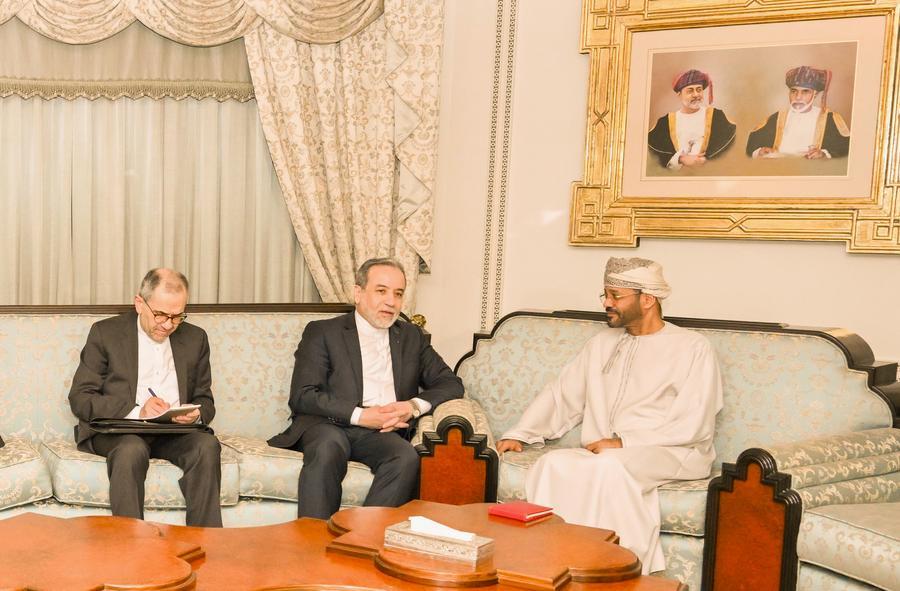
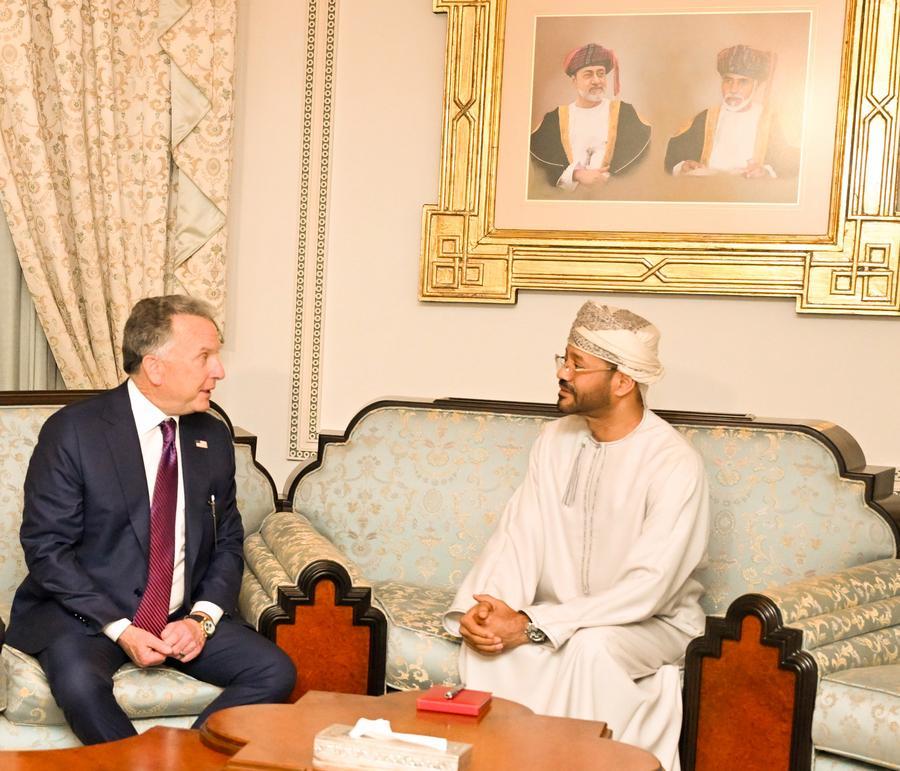
In the first stage, the Iranian delegation, headed by Foreign Minister Seyed Abbas Araghchi, presented its desired plan to Omani Foreign Minister Sayyid Badr bin Hamad Al Busaidi, who conveyed it to the U.S. negotiating team led by U.S. president's special envoy Steve Witkoff.
In the second stage, the U.S. delegation's response to Iran's proposal was relayed to the Iranian side.
According to a statement released by Oman's Foreign Ministry, the indirect talks were focused on preparing the ground for the resumption of diplomatic and technical negotiations on the Iranian nuclear issues.
Following the meeting, Araghchi offered a relatively positive assessment of the outcome.
"Our concerns and interests, the Iranian people's rights and everything that needed to be said, were relayed to the other side in a very good atmosphere, and the other side's views were also heard," Araghchi told Iran's state-run IRIB TV.
He said the two sides were almost "on the same page" about continuing the talks, adding the negotiations were decided to continue, but their date and format would be decided later in consultations to be held through the Omani side.
"Today, we held some good discussions on this issue, and the two sides heard each other's views and decided to continue that," he stressed. "In general, I can say that it was a good start."
Following the talks, Al Busaidi, the Omani foreign minister, posted a statement on social media, calling the talks "very serious" and "useful."
The discussions helped clarify each side's position and identify potential areas for progress, he said, adding that the parties "aim to reconvene in due course, with the results to be considered carefully in Tehran and Washington."
"DEEP DISTRUST"
Although getting delegations from the two countries to the negotiation table itself represents a diplomatic step forward, the deep-rooted distrust and differences between the two countries remain unresolved at their core.
Prior to the talks, the two countries had discord over the location and format of the discussions, which served as a microcosm of their broader divisions.
U.S. Secretary of State Marco Rubio, at a news conference in Washington on Wednesday, outlined a broad agenda for any "meaningful" talks with Iran, which he said must include Tehran's ballistic missiles, nuclear program, regional sponsorship of "terrorist organizations," and its treatment of the people.
But for Iran, the issues that the United States wants to discuss touch on its core national interests. What Tehran has shown a willingness to negotiate on are nuclear matters and the lifting of sanctions.
Esmaeil Kowsari, an Iranian lawmaker, said earlier this week that Iran's missile capabilities and regional issues "have absolutely nothing to do with the Americans or the West," urging them not to make "excessive demands in these areas."
According to Iranian officials, Friday's negotiations appeared to have reflected Iran's demands.
In his interview, Araghchi said that the country's talks with the United States were solely focused on the nuclear issue.
"The topic of our talks (with the United States) is solely the nuclear issue, and we do not negotiate with the Americans on any other issue," he said.
Araghchi also admitted that "the very deep distrust ... poses a very big challenge to the negotiations."
Analysts echoed that there is still a long road ahead before the two countries can patch things up through negotiations.
"So far, the talks have prevented or delayed an American attack. The dialogue signals readiness to negotiate and possibly preference for a political solution, but this is still the beginning," said Eyal Zisser, vice rector at Israel's Tel Aviv University.
"PAINKILLER RATHER THAN REAL CURE"
The latest dialogue has not substantively alleviated the ongoing tensions between the two countries, nor the broader clouds of conflict looming over the region.
As the negotiations between the two countries were underway, a U.S. "massive armada" led by the aircraft carrier Abraham Lincoln remained stationed in the Arabian Sea. On the same day, the U.S. State Department issued a warning to U.S. citizens in Iran: "Leave Iran now."
Iran seems to have also prepared for the worst. Just before Iran's delegation departed for Oman, the country unveiled an underground facility, where the Khorramshahr-4 long-range ballistic missile was prominently displayed among the operational assets showcased at the site.
Iranian media described the Khorramshahr-4 as one of the country's advanced medium- to long-range ballistic missiles, with an estimated range of about 2,000 km, capable of reaching Israel and U.S. military bases across the Middle East.
"Continued U.S. warnings underscore a climate of pressure rather than confidence-building. As a result, the talks have yet to translate into tangible calming effects on the regional security environment," said Khalid Al Hroub, a political analyst and professor of international politics at North Western University in Qatar.
"The latest round of U.S.-Iran negotiations failed to produce a major breakthrough," opined Metwally Hassan, a researcher in Iranian affairs with the Nile Center for Strategic and Political Studies based in Egypt.
Echoing Hassan's take, Sabah al-Sheikh, a politics professor at Baghdad University, said "the current talks may have contributed to cooling things down for now, yet they remain closer to a painkiller rather than a real cure for the crisis."
Although the results of the talks fall short of regional expectations, analysts believe there are still aspects worth acknowledging.
"More significant than any written outcomes is the survival of de-escalation channels themselves," al-Sheikh stressed.
"The talks have contributed to a relative easing of concerns among some countries, particularly those worried about the outbreak of a wider war," said Hossam Al-Dajni, a Palestinian political Analyst from Gaza.
"They have also provided a modest diplomatic margin for regional initiatives aimed at containing crises, though this margin remains limited and fragile," Al-Dajni added.
(Video reporters: Dong Xiuzhu, Khaled Orabi, Wang Qiang, Vanaki; video editors: Liang Wanshan, Zheng Qingbin)■









Comments